
HOW CRYSTAL MEDIA MAKES YOUR STORE AI-SEARCH READY: A Complete CRO Guide to AI-SEO + Chatbot Shopping
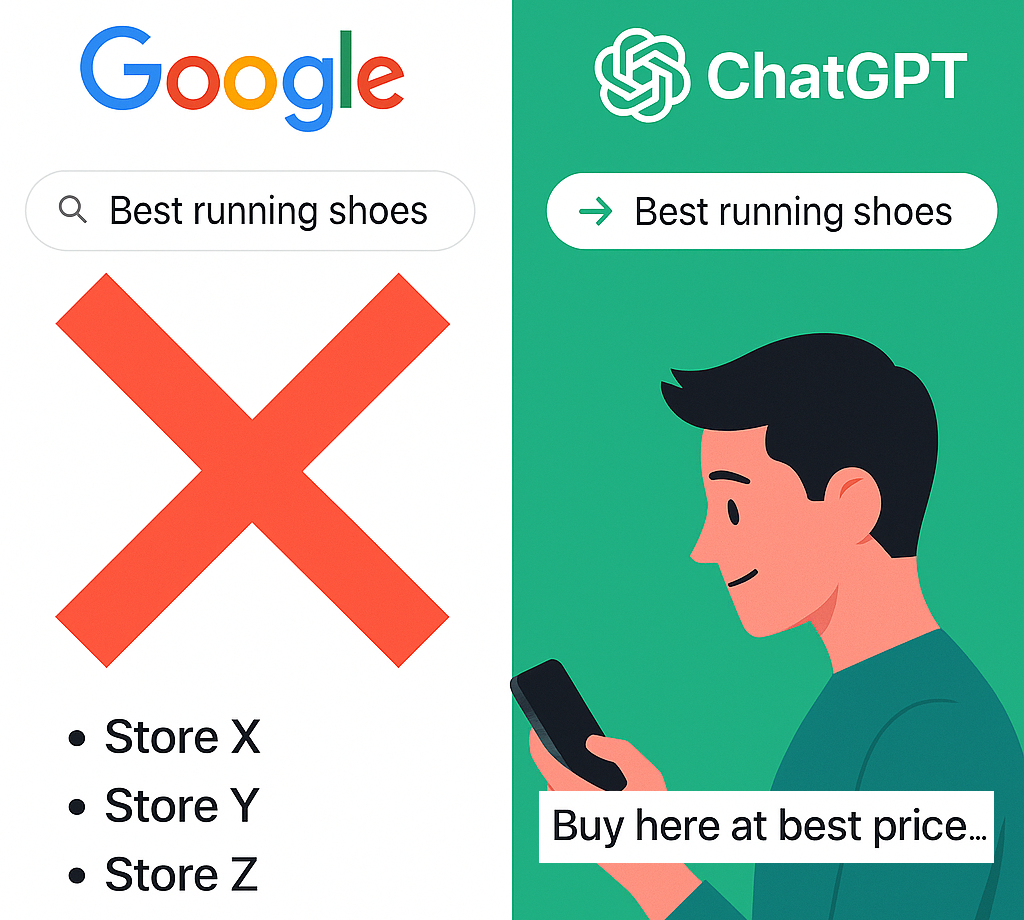
At Crystal Media, we’ve developed a next-generation of Conversion Rate Optimization process: AI-SEO + ChatGPT Shopping Setup, designed to help brands thrive in the era of AI-driven product discovery. As consumer behaviour shifts toward conversational shopping, asking ChatGPT, Gemini, Copilot or other AI agents: “What’s the best product for X?”. Your brand needs to be the one these systems understand, trust, and recommend.
Our framework ensures your products become:
- Readable for large language models (LLMs)
- Recommendable during AI shopping research flows
- Trustable thanks to enriched brand, review, and contextual signals
The mission is simple: when people ask an AI bot for product suggestions in your category, your brand must appear in those recommendations naturally and consistently. Below is a deeper look at how we make that happen.
1) AI-Friendly Product Data: Titles, Attributes & Descriptions That LLMs Understand
AI systems don’t “browse” like humans. They interpret meaning. That means messy, unclear, or minimal product data causes your product to get ignored.
We restructure your product information so AI clearly understands:
- Who the product is for
- What problem it solves
- Why it’s better than alternatives
Examples of What We Fix
Before (typical store listing):
“Premium Yoga Mat Blue”
AI cannot tell:
- who it’s meant for
- what makes it premium
- whether it solves a specific problem (slipping, support, eco-materials)
After (Crystal Media AI-optimized version):
“Non-Slip Eco Yoga Mat for Beginners & Hot Yoga, Extra Grip for Sweaty Workouts, 6mm Joint-Support Cushioning”
Now AI understands:
- Audience: beginners, hot-yoga users
- Benefit: extra grip during sweaty sessions
- Value: joint-support padding, eco-materials
This results in dramatically more visibility when users ask ChatGPT things like:
“Recommend a yoga mat for beginners” or
“What’s the best non-slip mat for hot yoga?”
2) Next-Gen Structured Data & Schema for Product, Review, FAQ & Brand Signals
LLMs depend heavily on structured data to interpret and trust a brand. We enrich your store with advanced schema far beyond what most eCommerce platforms offer out of the box.
What this includes:
- Product schema with clarity on materials, specifications, and use cases
- Review schema that exposes sentiment, credibility, and verification
- FAQ schema aligned with real customer questions
- Brand schema that establishes legitimacy and trust
Example
Old schema:
- product name
- price
- short description
Crystal Media enhanced schema:
- target user (e.g., runners with knee pain)
- performance details (e.g., shock absorption levels)
- verified review summaries with sentiment
- FAQs such as:
- “Is this suitable for daily running?”
- “What’s the return policy?”
- “How does it compare to Brand X?”
The richer the schema, the more confidently AI models will pull your brand into their shopping recommendations.
3) LLM-Index-Friendly Content: Pages Organized Around Real Buying Questions
LLMs don’t simply look for long articles, they look for answers. We structure your site content around how people naturally shop and research inside AI chats.
We build content such as:
- Buying guides
- Comparison pages
- Pros/cons summaries
- Clear trade-off explanations
- Feature-benefit breakdowns
Example Transformation
Before: A blog post titled “Top Features of Our Blender” generic, salesy.
After: A structured, LLM-friendly page answering:
- “What’s the quietest blender for small apartments?”
- “Which blender is best for smoothies with frozen fruit?”
- “Is this blender better than the Ninja or the Vitamix?”
- “What are the trade-offs between high power and long battery life?”
This turns your site into a source AI trusts when building “Best blenders for apartments” or “Top blenders for frozen smoothies” answers inside ChatGPT.
4) ChatGPT Shopping Setup & Compatibility Checks
ChatGPT’s shopping flow has specific rules for how it presents and ranks product recommendations. We perform a structured audit to ensure your catalog fits seamlessly into this system.
What we adjust:
- category matching
- product hierarchies
- pricing signals
- metadata consistency
- AI-optimized prompt suggestions
- product-to-query alignment
Example. If someone asks ChatGPT: “What’s the best ergonomic office chair for back pain under $300?”
Here’s what we ensure your product matches:
- price is correctly interpreted
- “ergonomic” is present in structured metadata
- back-pain-relief benefits are explicitly stated
- customer reviews mention comfort & posture
- category matches “ergonomic office chair”
We effectively reverse-engineer the ChatGPT shopping algorithm and make your products compatible with it.
5) Tracking AI-Driven Sessions & Conversions
Most brands have zero visibility into when someone arrives from ChatGPT or an AI agent. We fix that.
What we track:
- traffic originating from AI assistants
- GPT-assisted browsing sessions
- product views influenced by AI recommendations
- return visits after AI research
- AI-assisted conversion paths
Example. Your analytics dashboard will be able to show:
- “142 sessions originated from ChatGPT shopping queries this week.”
- “Visitors influenced by AI recommendations converted 2.4× higher.”
- “Top AI-triggered queries: ‘best organic skincare for acne’, ‘gifts for plant lovers’.”
This gives you the world’s first true AI-Shopping attribution model.
WHY THIS MATTERS FOR DTC BRANDS
- Buying journeys are changing fast
Consumers are already starting their product searches inside ChatGPT instead of Google or Amazon.
- AI-compatible brands become the “default recommendations”
If your data is readable, your brand becomes part of the short list AI repeatedly suggests.
- Lower CAC in the long term
AI-driven recommendations send traffic that is more qualified, warmer, and more ready to buy.
- Early adopters gain a real competitive moat
This is still the beginning. Brands that adapt now will dominate organic AI-shopping visibility for years.